

Emerging and established scientists, researchers and students assembled on Thursday, 20 November 2025 for the 38th Regional South African Society for Microbiology (SASM) Annual Symposium to share cutting-edge insights and innovative solutions shaped by microbiology and its cross-disciplinary influence.
The symposium was held at the University of Zululand’s (UNIZULU) Science Centre in Richards Bay and was hosted by the University’s Department of Biochemistry and Microbiology in partnership with SASM.
SASM, a non-profit professional association, is dedicated to the advancement of microbiological sciences in South Africa. Through platforms such as this symposium, SASM continues to foster collaboration.
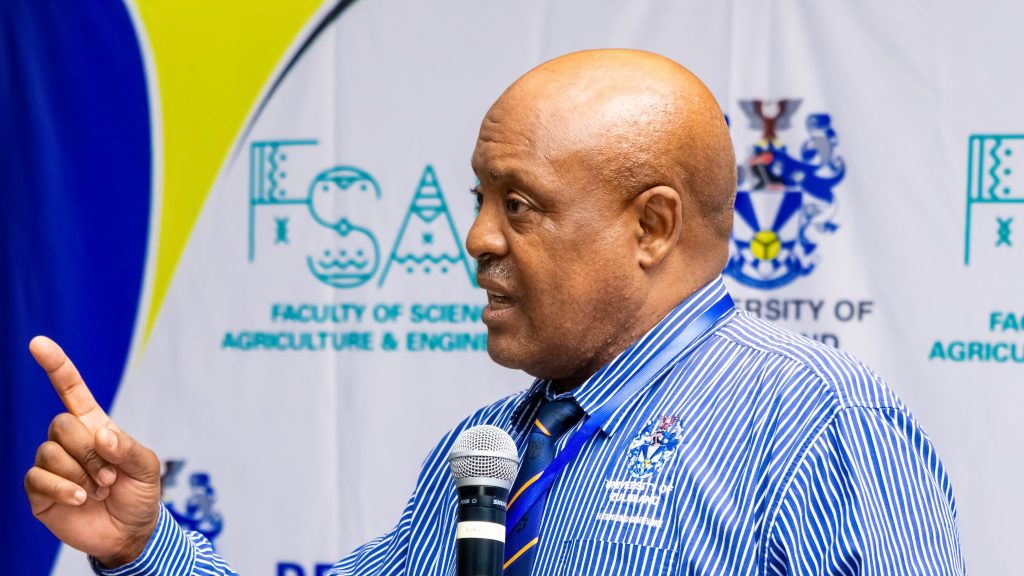
Themed “Microbial Frontiers for Sustainable Health and Innovation: Bridging Research, Biotechnology, and One Health,” the symposium brought together three leading institutions in KwaZulu-Natal – UNIZULU, University of KwaZulu-Natal (UKZN) and the Durban University of Technology (DUT). They were welcomed by Professor Sandile Songca, Acting Head of the Department of Biochemistry and Microbiology, who was ecstatic to witness a wide range of attendees. He was particularly pleased to see that supervisors had accompanied their students – an act he described as a reflection of commendable leadership.
This regional collaboration, according to Prof Songca, underscores the three universities’ collective commitment to advancing microbiological research, strengthening academic partnerships, and fostering knowledge exchange across disciplines.
The symposium saw multiple presentations for which attendees provided constructive feedback. Among the student participants who presented their work was Lebogang Maputla from DUT. Her study seeks to address a national gap in fertiliser production by converting industrial waste into biofertilizer. “South Africa is currently importing close to R18 billion worth of fertiliser, with prices driven higher by Russia-Ukraine war, as Russia is among the world’s largest exporters. This substantial import bill highlights a major gap in local fertiliser production,” Maputla said.
Another participant, Asande Nkosi, who is registered at UNIZULU, highlighted the importance of integrating indigenous knowledge with scientific research to combat pressing global health challenges. “Medicinal plants form a part of our upbringing in African households. Many of these plants are used traditionally as part of indigenous knowledge, yet some remain scientifically understudied. This study allows me to explore and bridge the gap between traditional indigenous knowledge while addressing a global health concern- antimicrobial resistance,” she said.
Nkosi added that antimicrobial resistance, a growing silent pandemic responsible for millions of deaths, is worsened by microorganisms developing mechanisms to evade antibiotics. “With the lag in drug development and the emergence of multidrug-resistant microorganisms such as Staphylococcus aureus, it may become impossible to treat infections in the future. My research aims to address antimicrobial resistance by exploring innovative and sustainable solutions using medical plants for antibacterial drug development,” she said.
– Ntombezinhle Zwane
Pictures: James Thwala
Captions
Main pic
Student attendees from UKZN, UNIZULU and DUT respectively, were excited to participate in the 39th SASM Symposium.
Pic 2
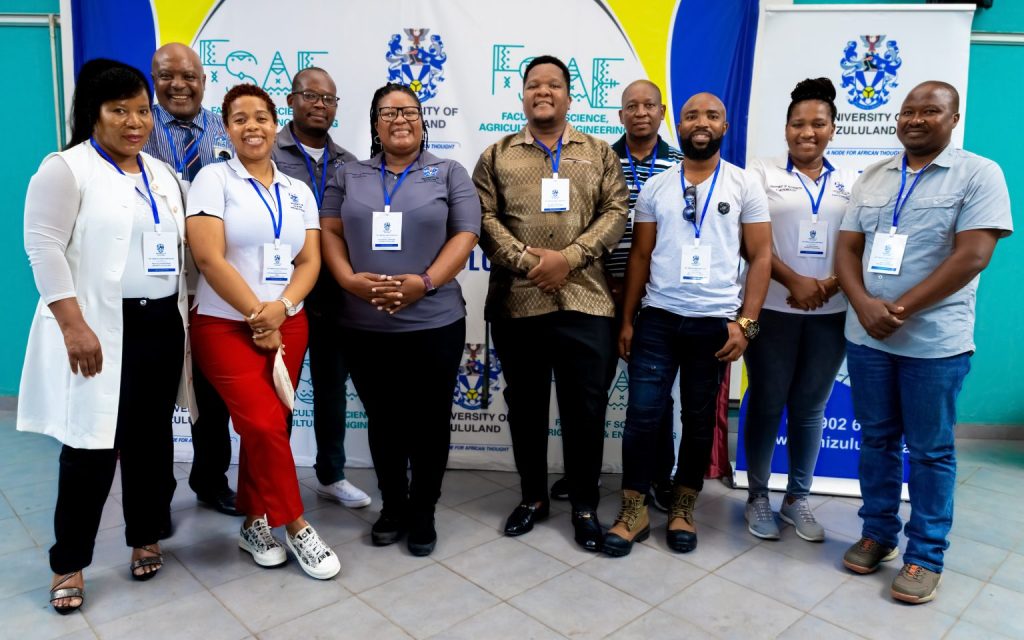
The organising team of the symposium.
Pic 3
Professor Sandile Songca, Acting Head of the Department of Biochemistry and Microbiology